I left Switzerland. When do I need an Authorized Recipient?

Even after permanently moving abroad, Swiss authorities may still send official documents to your last known address in Switzerland. This can include tax assessments, court notices, refund requests, penalty warnings – you name it. And not everyone has the option of having a reliable person in Switzerland who can act as a contact point between them and the tax office.
Some people ignore the issue and get away with it just fine… for a while, at least. But what if an important or urgent document doesn’t reach you and therefore goes unanswered?
Luckily, there is a legal solution that helps you stay up to date with official mail from Swiss authorities without having to be physically present in Switzerland: the so-called Authorized Recipient (or Zustellungsbevollmächtigter). Let’s take a closer look at how it actually works in practice – and what pitfalls you should definitely keep an eye on.
To be completely honest, having an Authorized Recipient is not always required. Still, there are quite a few practical situations where Swiss law obliges you to appoint an official contact person for the authorities – a so-called authorized recipient.
Common scenarios where having an Authorized Recipient becomes necessary:
- Own property in Switzerland
Rental income, wealth tax, EigenmietwertDer Eigenmietwert ist ein wichtiger Faktor, der bei der Berechnung der Steuern von Immobilieneigentümern berücksichtigt wird. Er ist der hypothetische... Mehr - Have Swiss investments or bank accounts
Securities, dividends, withholding tax refunds - Still owe taxes from your time in Switzerland
The final partial-year tax return (unterjährige SteuererklärungEine Steuererklärung ist eine Dokumentation, die von Steuerzahlern eingereicht wird, um ihre Einkommenssteuer gegenüber den Steuerbehörden zu erklären. Die Steuererklärung...) or the final calculation of it arrives after you’ve left. - Have pension assets (Pillar 2 or 3a)
Requests, notifications and payment confirmations go through official postal channels - Are involved in legal proceedings
Court notices, appeal deadlines (missing these is irreversible) - Receive Swiss social benefits or alimony
AHV correspondence, adjustment notices and reclaims

Under Swiss administrative law, a document is considered legally delivered once the authority has sent it to your last registered address — even if you never receive it. Deadlines run from that date. This means you can lose appeal rights, face late penalties, or miss refund windows without ever knowing a document existed.
No official contact person for the authorities: real scenarios
We have gathered several typical scenarios our clients have confronted with in real life.
These are the troubles our clients come to us with — after something has already gone wrong.
Anna, 41
Zurich → Berlin
Situation: Anna sold her Zurich apartment but still owns a second property she rents out. She deregistered and moved to Germany.
Without an Authorized Recipient: A tax assessment with a CHF 3’200 adjustment arrived at her old address. She never saw it. The appeal window closed. She paid the full amount + interest.

Marco, 35
Basel → Singapore
Situation: Marco has a Swiss brokerage account with dividend-bearing securities. He moved to Singapore for work.
Without an Authorized Recipient: A withholding tax refund form was sent and then expired. He lost CHF 1’800 in recoverable tax he was legally owed — simply because no one was there to handle the paperwork.

Sophie, 53
Geneva → Dubai
Situation: Sophie was involved in a Swiss civil dispute before emigrating. She believed it was resolved.
Without an Authorized Recipient: Court papers arrived months later. Deemed served. No response was filed. Judgment entered by default. She only discovered this when trying to access her Swiss bank account.

Peter, 47
Bern → Canada
Situation: Peter submitted his final Swiss tax return before leaving, but the authority sent follow-up questions.
Without an Authorized Recipient: No one received the letter. The authority filed estimates — far above his actual income. His Swiss bank account was flagged for enforcement.

What exactly is an authorized recipient?
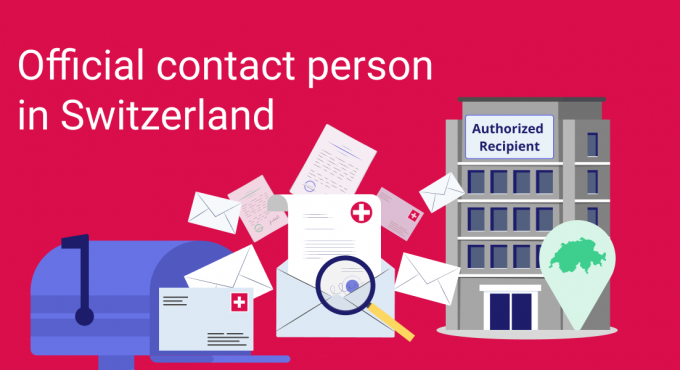
An authorized recipient (Zustellungsbevollmächtigter) is a person or company based in Switzerland that acts as your official contact point for Swiss authorities. They are legally entitled to receive administrative and legal documents on your behalf while you are living abroad.
Under Swiss law – especially the Federal Act on Administrative Procedure (VwVG) and various cantonal tax laws – authorities may require you to appoint such a recipient if you live outside Switzerland but still maintain legal, tax, or financial ties to the country.
Now, before choosing your authorized recipient, there are a few things worth keeping in mind. You cannot just pick and choose any person or company based in Switzerland. In practice, the Authorized Recipient is usually one of the following:
- A Swiss-based fiduciary or tax advisor i
- A Swiss lawyer, notary, or certified accountant
- A registered service provider specializing in expat administration
A PO Box or mail forwarding service alone is NOT sufficient under Swiss law. The authorized recipient must be a natural or legal person with a valid, registered Swiss address and the legal capacity to accept official correspondence.
Common workflow with an authorized recipient
Once you have a trustworthy authorized recipient in place, dealing with Swiss authorities becomes a lot easier. Below is a typical document flow, starting from the moment a Swiss authority issues a document in your name all the way to the point where it’s properly handled.
- Issuing of a document by Swiss authorities
This can include things like tax assessments, court notices, refund claims, legal deadlines, or other official communications. - Delivery to your Swiss address
The authority sends the document to your last known Swiss address – usually the address of your Authorized Recipient. - Receipt by your Authorized Recipient
Your designated recipient – whether it’s a fiduciary, lawyer, or another trusted professional – officially receives the document on your behalf. - Notification and start of the deadline period
The recipient forwards the document to you (digitally or physically) and informs you about any important deadlines or required actions. - Timely handling of responses
Appeals, objections, payments, or replies can then be handled properly and within the legal timeframe – helping you avoid unnecessary penalties or default decisions.
Cost, reliability, and the value of professional support
When choosing an authorized recipient, it ultimately comes down to two primary variables: cost and absolute reliability. However, «cheap» can quickly become very expensive when dealing with Swiss authorities.
What does a serious address cost?
A reliable, professional authorized recipient service in Switzerland typically costs between CHF 400 and CHF 700 per year for standard maintenance. While you might find budget providers or private individuals offering to forward your mail for CHF 50 to CHF 100 a year, opting for a cut-rate alternative carries severe risks.
Risk areas for authorized recepient cheap alternatives
-

Missed deadlines
Under Swiss law, a document is legally deemed served the moment it arrives at your representative’s address. If a cheap service delays scanning your mail by just two weeks, your legal appeal window may already be permanently closed.
-

Lack of continuity
Private individuals move, go on vacation, or change addresses. If your Authorized Recipient fails to notify the tax office of an address change, mail will be returned, and the authorities may resort to public notification or default rulings against you.
-

Privacy violations
Official documents contain sensitive financial data, salary details, and debt enforcement records. Cheap services often lack secure scanning pipelines and data handling certifications.
The fiduciary advantage: more than just mail forwarding
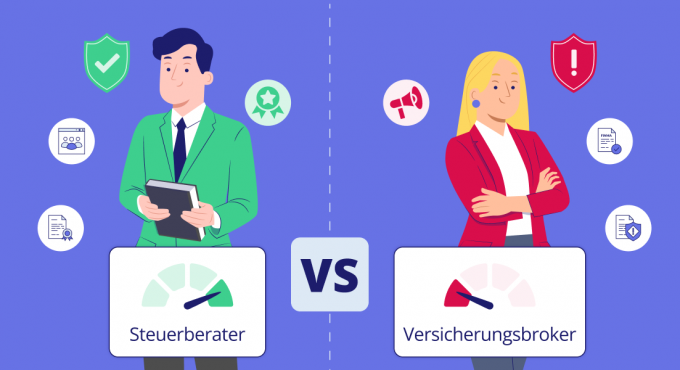
Legally, an authorized recipient is only required to receive and forward your mail – they do not automatically act on your behalf. However, there is a massive practical advantage if a fiduciary (Treuhänder) or tax advisor provides this address compared to a standard mail-forwarding company or a private acquaintance.
 Expert first-line screening
When official mail arrives, a fiduciary immediately understands what the document is. They can distinguish between a routine notification and an urgent, legally binding tax assessment or penalty warning.
 Direct access to advice
Swiss tax advisors and fiduciaries generally do not answer isolated, one-off questions from individuals who are not active clients. By holding your domicile address with them, you establish an active mandate.
 Proactive risk management
A fiduciary knows how Swiss administrative processes work. If an unjustified estimate or an incorrect withholding tax deduction arrives, they can flag the error instantly, avoiding major complications.
 Core tasks and ongoing support
The day-to-day duties of a professional authorized recipient primarily revolve around secure digital scanning and immediate forwarding of your correspondence.
However, the true value of a professional setup becomes clear when you are physically absent from the country and unable to interface with the system. Having a qualified professional monitoring your mailbox ensures that if a crisis arises – such as an erroneous bank account flag or a sudden administrative demand – you have an expert on the ground ready to step in, provide immediate guidance, and protect your interests.
Not sure where to find a trustworthy authorized recipient?
Your legal ties to Switzerland don’t simply disappear once you move abroad. The expert team at abrechnungen.ch helps expats and non-residents stay on top of their Swiss legal and tax obligations. Don’t risk missing an important deadline.
Weitere interessante Artikel zum Thema finden Sie hier:
9695